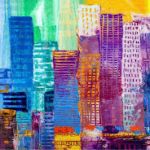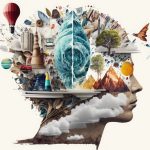

The use of art in hospital design can take many forms, and there are good reasons for doing so that have been uncovered through research. Art based on nature or with recognizable human subjects is typically the safest bet, but the effects of abstract or figurative works are more complex. Is abstraction really frightening, or a powerful tool for recovery? Read on!
Art therapy helps people in many ways, including being more self-aware and enhancing their interpersonal skills.
-Dr. Stacey Denise

What exactly is your definition of abstract art? It’s more than just an optical illusion; it’s an emotional condition. Should we truly be afraid of abstraction when it comes to becoming well?
Abstract vs. Abstraction: How both Art Forms Differ
There are examples of abstract art from prehistoric times. In this respect, the ancient Egyptian sculpture Slave Girl, dated to around 3100 BC, is a very early example. Using abstract lines and patterns, the artist depicted two individuals in motion, their arms and legs joined in a dance. It’s possible that abstract art represents one of humanity’s earliest attempts at communicating its innermost thoughts and feelings to others. The goal of abstract art is not to depict objects or scenes as they appear in reality.

Artists working in the abstract genre are free to utilize any combination of visual elements—including color, form, texture, and line—to produce works that are deliberately devoid of literal interpretation.
In addition to bridging cultural gaps, abstract art has been found to have therapeutic effects on both its creator and its audience. The use of art in healthcare facilities is becoming increasingly mainstream, with the United States being among the many countries that actively promote this trend.
As a matter of fact, art therapy has garnered a lot of support over the years because of the excellent effects it has on patients’ health and so is an essential component of a recovery strategy.

You May Like: How Art Therapy Can Help Break the Chains of Alexithymia
Sometimes the reason we are feeling down is that we have had too much of the same thing in our lives. In these times, the novel experience provided by abstraction can be a source of healing and joy.
There is a substantial body of abstract art that was developed for the express goal of healing. Abstract art therapy can benefit mental health in a number of ways, including by allowing us to see things from different angles and finding meaning in times of confusion.
One way is through studying the works of artists who turned to abstraction as a means of self-healing under difficult circumstances. Sometimes we can’t put a finger on what’s causing the pain we’re feeling on the inside, but abstract art therapy can help.
Art therapy and the case for abstraction
Even beyond its inherent healing properties, abstraction has other physiological benefits. It has been shown that art therapy can help with pain management, stress reduction, and even cognitive improvement. This could be because of the natural high we get from making art or even just from observing the creative process of others without criticism.

You May Like: Art Is Medicine: Healing C-PTSD and Alexithymia Through Creativity
Abstraction aids in physical recovery by providing a safe environment in which individuals may focus on self-discovery and establishing a sense of belonging. Although anxiety and despair are not universally experienced, they are typical among those who feel they do not belong or have a meaningful role in life.
Experiencing painful medical illnesses or treatments can leave children feeling helpless and afraid to express their emotions. Here’s where art therapy can be of great assistance to those in need.
Art therapy can be a safe place for individuals to learn more about themselves and build relationships with others. Art therapy often employs collaborative methods that assist patients to find their niche in society, all the while honoring and valuing their unique qualities.

Reducing stress and refocusing attention away from physical discomfort have been shown to boost health. Those of us who are lonely and hurting can find solace in the company of others who can relate to our plight through group art therapy. Everyone involved will grow personally and professionally, fostering more healing than any single individual could achieve on their own.
Expression is a key component of art therapy, and the abstract aesthetic encourages this freedom of expression. Many people find solace and liberation in the fact that there are no strict regulations governing how to depict objects in this style. Patients’ lives can be improved by the combination of art and medicine, according to the American Art Therapy Association.

The American Art Therapy Association maintains that art therapy can be beneficial for people, families, and communities when administered by trained professionals.
Conclusion
We need to think about art now as a way to get away from the pressures of modern life. I take comfort in knowing that, as a fine art photographer, my work is more than the sum of its parts.
To me, it signifies an attempt to recover while also testing the limits of what is considered “acceptable” in the fields of abstract art and art therapy.